|
|||
|
AN INSTANT NEW YORK TIMES BESTSELLER No matter what you eat, how much you exercise, how skinny or young or wise you are, none of it matters if you’re not breathing properly. There is nothing more essential to our health and well-being than breathing: take air in, let it out, repeat twenty-five thousand times a day. Yet, as a species, humans have lost the ability to breathe correctly, with grave consequences. Journalist James Nestor travels the world to figure out what went wrong and how to fix it. The answers aren’t found in pulmonology labs, as we might expect, but in the muddy digs of ancient burial sites, secret Soviet facilities, New Jersey choir schools, and the smoggy streets of São Paulo. Nestor tracks down men and women exploring the hidden science behind ancient breathing practices like Pranayama, Sudarshan Kriya, and Tummo and teams up with pulmonary tinkerers to scientifically test long-held beliefs about how we breathe. Modern research is showing us that making even slight adjustments to the way we inhale and exhale can jump-start athletic performance; rejuvenate internal organs; halt snoring, asthma, and autoimmune disease; and even straighten scoliotic spines. None of this should be possible, and yet it is. Drawing on thousands of years of medical texts and recent cutting-edge studies in pulmonology, psychology, biochemistry, and human physiology, Breath turns the conventional wisdom of what we thought we knew about our most basic biological function on its head. You will never breathe the same again. |

|
|||
|
«Адская неделя» – это спецкурс, который в норвежской армии используется при подготовке бойцов спецназа. Эрик Бертран Ларссен, прошедший такую подготовку, предлагает «гражданскую версию» – 7-дневный продуманный интенсив, на который способен любой человек, независимо от рода его занятий. Зачем? Чтобы ощутить вкус жизни, значение простых вещей и узнать, на что вы в действительности способны, а главное – получить импульс для перемен к лучшему. |

|
|||
|
A biologist reveals the secret world hidden in a single square meter of old-growth forest—a finalist for the Pulitzer Prize and the Pen/E.O. Wilson Literary Science Writing Award  Combining elegant writing with scientific expertise,  The Forest Unseen "injects much-needed vibrancy into the stuffy world of nature writing" ( Outside , "The Outdoor Books That Shaped the Last Decade") In this wholly original book, biologist David Haskell uses a one- square-meter patch of old-growth Tennessee forest as a window onto the entire natural world. Visiting it almost daily for one year to trace nature's path through the seasons, he brings the forest and its inhabitants to vivid life. Each of this book's short chapters begins with a simple observation: a salamander scuttling across the leaf litter; the first blossom of spring wildflowers. From these, Haskell spins a brilliant web of biology and ecology, explaining the science that binds together the tiniest microbes and the largest mammals and describing the ecosystems that have cycled for thousands- sometimes millions-of years. Each visit to the forest presents a nature story in miniature as Haskell elegantly teases out the intricate relationships that order the creatures and plants that call it home. Written with remarkable grace and empathy, The Forest Unseen is a grand tour of nature in all its profundity. Haskell is a perfect guide into the world that exists beneath our feet and beyond our backyards. |

|
|||
|
The Golden Spruce is the story of a glorious natural wonder, the man who destroyed it, and the fascinating, troubling context in which his act took place. A tree with luminous glowing needles, the golden spruce was unique and, biologically speaking, should never have reached maturity; Grant Hadwin, the man who cut it down, was passionate, extraordinarily well-suited to wilderness survival, and to some degree unbalanced. But as John Vaillant shows, the extraordinary tree stood at the intersection of contradictory ways of looking at the world; the conflict between them is one reason it was destroyed. Taking in history, geography, science and spirituality, this book raises some of the most pressing questions facing society today. The golden spruce stood in the Queen Charlotte Islands (Haida Gwaii), an unusually rich ecosystem where the normal lines between species blur. Without romanticizing, Vaillant shows that this understanding is typified by the Haida, the native people who have lived there for millennia, and for whom the golden spruce was an integral part of their history and mythology. But seen a different way, the golden spruce stood in block 6 of Tree Farm License 39. Grant Hadwin had worked as a remote scout for timber companies. But over time Hadwin was pushed into a paradox: the better he was at his job, the more the world he loved was destroyed. On January 20, 1997, with the temperature near zero, Hadwin swam across the Yakoun River with a chainsaw. He tore into the golden spruce, leaving it so unstable that the first wind would push it over. A few weeks later, Hadwin set off in a kayak across the treacherous Hecate Strait to face court charges. He has not been heard from since. Vaillant describes Hadwin’s actions in engrossing detail, but also provides the complex environmental, political and economic context in which they took place. The Golden Spruce forces one to ask: can the damage our civilization exacts on the natural world be justified? |
|
|||
|
In this groundbreaking union of art and science, rocker-turned-neuroscientist Daniel J. Levitin explores the connection between music—its performance, its composition, how we listen to it, why we enjoy it—and the human brain. Taking on prominent thinkers who argue that music is nothing more than an evolutionary accident, Levitin poses that music is fundamental to our species, perhaps even more so than language. Drawing on the latest research and on musical examples ranging from Mozart to Duke Ellington to Van Halen, he reveals: • How composers produce some of the most pleasurable effects of listening to music by exploiting the way our brains make sense of the world • Why we are so emotionally attached to the music we listened to as teenagers, whether it was Fleetwood Mac, U2, or Dr. Dre • That practice, rather than talent, is the driving force behind musical expertise • How those insidious little jingles (called earworms) get stuck in our head A Los Angeles Times Book Award finalist, This Is Your Brain on Music will attract readers of Oliver Sacks and David Byrne, as it is an unprecedented, eye-opening investigation into an obsession at the heart of human nature. |

|
|||
|
First published in 1949 and praised in The New York Times Book Review as "a trenchant book, full of vigor and bite," A Sand County Almanac combines some of the finest nature writing since Thoreau with an outspoken and highly ethical regard for America's relationship to the land. Written with an unparalleled understanding of the ways of nature, the book includes a section on the monthly changes of the Wisconsin countryside; another part that gathers informal pieces written by Leopold over a forty-year period as he traveled through the woodlands of Wisconsin, Iowa, Arizona, Sonora, Oregon, Manitoba, and elsewhere; and a final section in which Leopold addresses the philosophical issues involved in wildlife conservation. As the forerunner of such important books as Annie Dillard's Pilgrim at Tinker Creek, Edward Abbey's Desert Solitaire, and Robert Finch's The Primal Place, this classic work remains as relevant today as it was forty years ago. |

|
|||
|
The groundbreaking, "seminal work" ( Time ) on intelligent design that dares to ask, was Darwin wrong? In 1996, Darwin's Black Box helped to launch the intelligent design movement: the argument that nature exhibits evidence of design, beyond Darwinian randomness. It sparked a national debate on evolution, which continues to intensify across the country. From one end of the spectrum to the other, Darwin's Black Box has established itself as the key intelligent design text -- the one argument that must be addressed in order to determine whether Darwinian evolution is sufficient to explain life as we know it. In a major new Afterword for this edition, Behe explains that the complexity discovered by microbiologists has dramatically increased since the book was first published. That complexity is a continuing challenge to Darwinism, and evolutionists have had no success at explaining it. Darwin's Black Box is more important today than ever. |
|
|||
|
This eBook is best viewed on a color device. Smell the bark of the aromatic Sassafras. Wonder at the Lodgepole Pine, whose heat-activated cones reseed forests destroyed by fire. Search for the Sugar Maple, whose foliage blazes red and yellow in autumn. North America's trees rank among nature's most awesome creations. This premier field guide features all characteristics-tree shape, bark, leaf, flower, fruit and twig-for quick identification, making it a superior choice for trail walks, creating displays, and scientific or commercial needs. -All of North America in one volume -Over 730 species in 76 families and 160 range maps -Native species and important introduced foreign varieties -Text, range maps, and illustrations seen together at a glance -Common and scientific names -Convenient measuring rules |

|
|||
|
The author of the Pulitzer Prize finalist  The Forest Unseen  visits with nature’s most magnificent networkers — trees    “Both a love song to trees, an exploration of their biology, and a wonderfully philosophical analysis of their role they play in human history and in modern culture.” – Science Friday   WINNER OF THE 2018 JOHN BURROUGHS MEDAL FOR OUTSTANDING NATURAL HISTORY WRITING David Haskell has won acclaim for eloquent writing and deep engagement with the natural world. Now, he brings his powers of observation to the biological networks that surround all species, including humans. Haskell repeatedly visits a dozen trees, exploring  connections with people, microbes, fungi, and other plants and animals. He takes us to  trees in cities (from Manhattan to Jerusalem), forests (Amazonian, North American, and boreal) and areas on the front lines of environmental change (eroding coastlines, burned mountainsides, and war zones.)  In each place he shows how human history, ecology, and well-being are intimately intertwined with the lives of trees.   Scientific, lyrical, and contemplative, Haskell reveals the biological connections that underpin all life.  In a world beset by barriers, he reminds us that life’s substance and beauty emerge from relationship and interdependence. |

|
|||
|
This eBook is best viewed on a color device. This guide describes and illustrates, in full color, the plants and animals that live in or near ponds, lakes, streams, and wetlands. It includes surface-dwelling creatures as well as those of open water, the bottom, and the shore and tells how various animals and plants live together in a community. Plus suggestions for: Where and when to look Observing and collecting specimens Making exciting discoveries |

|
|||
|
INSTANT NEW YORK TIMES BESTSELLER “One of the most important books I’ve ever read—an indispensable guide to thinking clearly about the world.” – Bill Gates “Hans Rosling tells the story of ‘the secret silent miracle of human progress’ as only he can. But Factfulness does much more than that. It also explains why progress is so often secret and silent and teaches readers how to see it clearly.” — Melinda Gates " Factfulness by Hans Rosling, an outstanding international public health expert, is a hopeful book about the potential for human progress when we work off facts rather than our inherent biases." - Former U.S. President Barack Obama Factfulnes s: The stress-reducing habit of only carrying opinions for which you have strong supporting facts. When asked simple questions about global trends— what percentage of the world’s population live in poverty; why the world’s population is increasing; how many girls finish school —we systematically get the answers wrong. So wrong that a chimpanzee choosing answers at random will consistently outguess teachers, journalists, Nobel laureates, and investment bankers. In Factfulness , Professor of International Health and global TED phenomenon Hans Rosling, together with his two long-time collaborators, Anna and Ola, offers a radical new explanation of why this happens . They reveal the ten instincts that distort our perspective —from our tendency to divide the world into two camps (usually some version of us and them ) to the way we consume media (where fear rules) to how we perceive progress (believing that most things are getting worse). Our problem is that we don’t know what we don’t know, and even our guesses are informed by unconscious and predictable biases. It turns out that the world, for all its imperfections, is in a much better state than we might think. That doesn’t mean there aren’t real concerns. But when we worry about everything all the time instead of embracing a worldview based on facts, we can lose our ability to focus on the things that threaten us most. Inspiring and revelatory, filled with lively anecdotes and moving stories, Factfulness is an urgent and essential book that will change the way you see the world and empower you to respond to the crises and opportunities of the future. --- “This book is my last battle in my life-long mission to fight devastating ignorance…Previously I armed myself with huge data sets, eye-opening software, an energetic learning style and a Swedish bayonet for sword-swallowing. It wasn’t enough. But I hope this book will be.” Hans Rosling, February 2017. |
|
|||
|
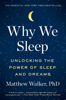
“ Why We Sleep is an important and fascinating book…Walker taught me a lot about this basic activity that every person on Earth needs. I suspect his book will do the same for you.” —Bill Gates A New York Times bestseller and international sensation, this “stimulating and important book” ( Financial Times ) is a fascinating dive into the purpose and power of slumber. With two appearances on CBS This Morning and Fresh Air 's most popular interview of 2017, Matthew Walker has made abundantly clear that sleep is one of the most important but least understood aspects of our life. Until very recently, science had no answer to the question of why we sleep, or what good it served, or why we suffer such devastating health consequences when it is absent. Compared to the other basic drives in life—eating, drinking, and reproducing—the purpose of sleep remains more elusive. Within the brain, sleep enriches a diversity of functions, including our ability to learn, memorize, and make logical decisions. It recalibrates our emotions, restocks our immune system, fine-tunes our metabolism, and regulates our appetite. Dreaming creates a virtual reality space in which the brain melds past and present knowledge, inspiring creativity. In this “compelling and utterly convincing” ( The Sunday Times ) book, preeminent neuroscientist and sleep expert Matthew Walker provides a revolutionary exploration of sleep, examining how it affects every aspect of our physical and mental well-being. Charting the most cutting-edge scientific breakthroughs, and marshalling his decades of research and clinical practice, Walker explains how we can harness sleep to improve learning, mood and energy levels, regulate hormones, prevent cancer, Alzheimer’s and diabetes, slow the effects of aging, and increase longevity. He also provides actionable steps towards getting a better night’s sleep every night. Clear-eyed, fascinating, and accessible, Why We Sleep is a crucial and illuminating book. Written with the precision of Atul Gawande, Andrew Solomon, and Sherwin Nuland, it is “recommended for night-table reading in the most pragmatic sense” ( The New York Times Book Review ). |
|
|||
|
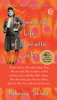
#1  NEW YORK TIMES  BESTSELLER • “The story of modern medicine and bioethics—and, indeed, race relations—is refracted beautifully, and movingly.”— Entertainment Weekly NOW A MAJOR MOTION PICTURE FROM HBO® STARRING OPRAH WINFREY AND ROSE BYRNE • ONE OF THE “MOST INFLUENTIAL” (CNN), “DEFINING” ( LITHUB ), AND “BEST” ( THE PHILADELPHIA INQUIRER ) BOOKS OF THE DECADE • ONE OF  ESSENCE ’S 50 MOST IMPACTFUL BLACK BOOKS OF THE PAST 50 YEARS • WINNER OF THE  CHICAGO TRIBUNE  HEARTLAND PRIZE FOR NONFICTION NAMED ONE OF THE BEST BOOKS OF THE YEAR BY  The New York Times Book Review  •  Entertainment Weekly  •  O: The Oprah Magazine  • NPR •  Financial Times  •  New York  •  Independent  (U.K.) •  Times  (U.K.) •  Publishers Weekly  •  Library Journal  •  Kirkus Reviews  •  Booklist  •  Globe and Mail Her name was Henrietta Lacks, but scientists know her as HeLa. She was a poor Southern tobacco farmer who worked the same land as her slave ancestors, yet her cells—taken without her knowledge—became one of the most important tools in medicine: The first “immortal” human cells grown in culture, which are still alive today, though she has been dead for more than sixty years. HeLa cells were vital for developing the polio vaccine; uncovered secrets of cancer, viruses, and the atom bomb’s effects; helped lead to important advances like in vitro fertilization, cloning, and gene mapping; and have been bought and sold by the billions.  Yet Henrietta Lacks remains virtually unknown, buried in an unmarked grave. Henrietta’s family did not learn of her “immortality” until more than twenty years after her death, when scientists investigating HeLa began using her husband and children in research without informed consent. And though the cells had launched a multimillion-dollar industry that sells human biological materials, her family never saw any of the profits. As Rebecca Skloot so brilliantly shows, the story of the Lacks family—past and present—is inextricably connected to the dark history of experimentation on African Americans, the birth of bioethics, and the legal battles over whether we control the stuff we are made of.  Over the decade it took to uncover this story, Rebecca became enmeshed in the lives of the Lacks family—especially Henrietta’s daughter Deborah. Deborah was consumed with questions: Had scientists cloned her mother? Had they killed her to harvest her cells? And if her mother was so important to medicine, why couldn’t her children afford health insurance?  Intimate in feeling, astonishing in scope, and impossible to put down,  The Immortal Life of Henrietta Lacks  captures the beauty and drama of scientific discovery, as well as its human consequences. |
|
|||
|
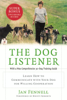
In The Dog Listener Jan Fennell shares her revolutionary insight into the canine world and its instinctive language that has enabled her to bring even the most delinquent of dogs to heel. This easy-to-follow guide draws on Jan's countless case histories of problem dogs—from biters and barkers to bicycle chasers—to show how you can bridge the language barrier that separates you from your dog. This edition includes a new 30-Day Training Guide to further incorporate Jan's powerful method into every element of pet ownership, including: Understanding what it means to care for a dogChoosing the right dog for youIntroducing your dog to its new homeOvercoming separation anxietyWalking on a leashDealing with behavioral problemsGrooming And much more |
|
|||
|
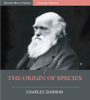
Charles Robert Darwin (12 February 1809 – 19 April 1882) was an English naturalist. He established that all species of life have descended over time from a common ancestry, and proposed the scientific theory that this branching pattern of evolution resulted from a process that he called natural selection. He published his theory with compelling evidence for evolution in his 1859 book On the Origin of Species , overcoming scientific rejection of earlier concepts of transmutation of species. On the Origin of Species , published on 24 November 1859, is considered to be the foundation of evolutionary biology. Its full title was On the Origin of Species by Means of Natural Selection, or the Preservation of Favoured Races in the Struggle for Life . For the sixth edition of 1872, the short title was changed to The Origin of Species . This edition of The Origin of Species is specially formatted for e-readers and includes pictures and a Table of Contents. |
|
|||
|
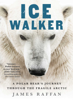
From bestselling author James Raffan comes an enlightening and original story about a polar bear’s precarious existence in the changing Arctic, reminiscent of John Vaillant’s The Golden Spruce . Nanurjuk, “the bear-spirited one,” is hunting for seals on Hudson Bay, where ice never lasts more than one season. For her and her young, everything is in flux. From the top of the world, Hudson Bay looks like an enormous paw print on the torso of the continent, and through a vast network of lakes and rivers, this bay connects to oceans across the globe. Here, at the heart of everything, walks Nanurjuk, or Nanu, one polar bear among the six thousand that traverse the 1.23 million square kilometers of ice and snow covering the bay. For millennia, Nanu’s ancestors have roamed this great expanse, living, evolving, and surviving alongside human beings in one of the most challenging and unforgiving habitats on earth. But that world is changing. In the Arctic’s lands and waters, oil has been extracted—and spilled. As global temperatures have risen, the sea ice that Nanu and her young need to hunt seal and fish has melted, forcing them to wait on land where the delicate balance between them and their two-legged neighbors has now shifted. This is the icescape that author and geographer James Raffan invites us to inhabit in Ice Walker . In precise and provocative prose, he brings readers inside Nanu’s world as she treks uncertainly around the heart of Hudson Bay, searching for nourishment for the children that grow inside her. She stops at nothing to protect her cubs from the dangers she can see—other bears, wolves, whales, human beings—and those she cannot. By focusing his lens on this bear family, Raffan closes the gap between humans and bears, showing us how, like the water of the Hudson Bay, our existence—and our future—is tied to Nanu’s. He asks us to consider what might be done about this fragile world before it is gone for good. Masterful, vivid, and haunting, Ice Walker is an utterly unique piece of creative nonfiction and a deeply affecting call to action. |
|
|||
|
Finalist, Roderick Haig-Brown Regional Prize, BC Book Prizes Finalist, Banff Mountain Book Competition Finalist, Shaughnessy Cohen Prize for Political Writing On a cool morning in the winter of 2011, a logger named Dennis Cronin was walking through a stand of old-growth forest near Port Renfrew on Vancouver Island. His job was to survey the land and flag the boundaries for clear-cutting. As he made his way through the forest, Cronin came across a massive Douglas fir the height of a twenty-storey building. It was one of the largest trees in Canada that if felled and milled could easily fetch more than fifty thousand dollars. Instead of moving on, he reached into his vest pocket for a flagging he rarely used, tore off a strip, and wrapped it around the base of the trunk. Along the length of the ribbon were the words “Leave Tree.” When the fallers arrived, every wiry cedar, every droopy-topped hemlock, every great fir was cut down and hauled away — all except one. The solitary tree stood quietly in the clear cut until activist and photographer T. J. Watt stumbled upon the Douglas fir while searching for big trees for the Ancient Forest Alliance, an environmental organization fighting to protect British Columbia's dwindling old-growth forests. The single Douglas fir exemplified their cause: the grandeur of these trees juxtaposed with their plight. They gave it a name: Big Lonely Doug. The tree would also eventually, and controversially, be turned into the poster child of the Tall Tree Capital of Canada, attracting thousands of tourists every year and garnering the attention of artists, businesses, and organizations who saw new values encased within its bark. Originally featured as a long-form article in The Walrus that garnered a National Magazine Award (Silver), Big Lonely Doug weaves the ecology of old-growth forests, the legend of the West Coast’s big trees, the turbulence of the logging industry, the fight for preservation, the contention surrounding ecotourism, First Nations land and resource rights, and the fraught future of these ancient forests around the story of a logger who saved one of Canada's last great trees. |

|
|||
|
From choosing and using to programming, charging and cleansing, Crystals is a modern guide to enhancing your life with these enchanting stones. Often referred to as ‘wisdom keepers’, crystals hold millions of years of the Earth’s history within them. Through emitting steady vibrations, they will help you to become more centred and balanced, creating spaces of Zen around you and your home. Featuring 51 of the most common and interesting crystals, this is a practical guide that will teach you about each stone’s individual properties and how to harness their powers. Discover which crystals are right for you, where best to position them, the perfect pairings and learn how to look after your crystals on a daily basis to deflect any negativity in your life. |
|
|||
|
Premier livre de Stephen Hawking écrit à l’intention du non-spécialiste, succès incontournable dès sa parution, Une brève histoire du temps présente dans un langage simple et accessible les développements contemporains de l’astrophysique. Retraçant les grandes théories du cosmos, de Galilée et Newton à Einstein et Poincaré, racontant les avancées prodigieuses de la recherche sur l’espace et le temps, expliquant la nature des trous noirs, il propose de relever le plus grand défi de la science moderne : la quête d’une théorie unitaire unifiant la relativité générale et la mécanique quantique. |

|
|||
|
“Meet the forensic scientists of climate change; if you like CSI, you’ll be equally enthralled with the skill and speed these folks exhibit. But the stakes are infinitely higher!”–Bill McKibben, author of Falter and The End of Nature Massive fires, widespread floods, Category 4 hurricanes—shocking weather disasters dominate news headlines every year, but not everyone agrees on what causes them. In this gripping nonfiction book, renowned scientist Friederike Otto provides an answer with attribution science, a revolutionary method for pinpointing the role of climate change in extreme weather events.  Angry Weather tells the compelling, day-by-day story of Hurricane Harvey, which caused over a hundred deaths and $125 billion in damage in 2017. As the hurricane unfolds, Otto reveals how attribution science works in real time, and determines that Harvey’s terrifying floods were three times more likely to occur due to human-induced climate change. This new ability to determine climate change’s role in extreme weather events has the potential to dramatically transform society—for individuals, who can see how climate change affects their loved ones, and corporations and governments, who may see themselves held accountable in the courts. Otto’s research laid out in this groundbreaking book will have profound impacts, both today and for the future of humankind. Published in Partnership with the David Suzuki Institute. |

|
|||
|
A top behavioral geneticist makes the case that DNA inherited from our parents at the moment of conception can predict our psychological strengths and weaknesses. In Blueprint , behavioral geneticist Robert Plomin describes how the DNA revolution has made DNA personal by giving us the power to predict our psychological strengths and weaknesses from birth. A century of genetic research shows that DNA differences inherited from our parents are the consistent lifelong sources of our psychological individuality—the blueprint that makes us who we are. Plomin reports that genetics explains more about the psychological differences among people than all other factors combined. Nature, not nurture, is what makes us who we are. Plomin explores the implications of these findings, drawing some provocative conclusions—among them that parenting styles don't really affect children's outcomes once genetics is taken into effect. This book offers readers a unique insider's view of the exciting synergies that came from combining genetics and psychology. The paperback edition has a new afterword by the author. |

|
|||
|
The ideal portable companion, the world-renowned Collins Gem series returns with a fresh new look and updated material. This is the perfect pocket guide for nature and foraging enthusiasts keen to identify the most commonly found mushrooms and toadstools in Britain and northern Europe. Authoritative text, beautiful photographs and detailed illustrations show the distinguishing features of each mushroom and toadstool, including details of size, habitat and when it can be found, whether it is edible or poisonous and most importantly, which similar species it can be confused with and why. This new edition builds on the strengths of the unrivalled original, now expanded to include over 240 species of mushroom and toadstool. About the author As a lecturer at Sheffield University and elsewhere, Patrick Harding leads courses on subjects ranging from identification of fungi, flowers and trees, to plants in medicine, the plant hunters and nature photography. His previous books include How to Identify Edible Mushrooms, Mushroom Miscellany and Wild Flowers of the Peak District. |

|
|||
|
The ideal portable companion, the world-renowned Collins Gem series returns with a fresh new look and updated material. This is the perfect pocket guide for nature enthusiasts keen to identify the most commonly seen trees, whether they are out on the town or strolling through the countryside. Authoritative text, beautiful photographs and detailed illustrations show not only the overall shape of the tree but also details of leaf shape, flowers, fruits and bark. Features both deciduous and evergreen species, with information on the origin of each species, its height, preferred habitat and growing conditions. Illustrations of cones, catkins, nuts and fruits allow you to distinguish between similar species at a glance. This new edition builds on the strengths of the best-selling, unrivalled original, now expanded to include over 220 trees and shrubs that are native to or flourish in Britain and northern Europe. About the author Alistair Fitter is Pro-Vice-Chancellor for Research and Professor of Ecology at the University of York. Among his publications are the Collins Pocket Guide to Wild Flowers and an Atlas of the Wild Flowers of Britain and Europe. He is a Fellow of the Royal Society, a Past President of the British Ecological Society, a member of NERC Council and an editor of the journal New Phytologist. David More has been a botanical illustrator for many years. His other books include Collins Tree Guide (2004), Trees of North America (1988) with the late Alan Mitchell, and the Illustrated Encyclopaedia of Trees (2003) by John White. He has also contributed artwork for many other books, magazines and posters, including a design for the Natural History Museum in London. |

|
|||
|
'Beautiful, evocative, authoritative.' Professor Brian Cox 'A wonderful portrait of these enigmatic, long-lost relatives.' Professor Alice Roberts One of the Best Books of 2020, Sunday Times Kindred is the definitive guide to the Neanderthals. Since their discovery more than 160 years ago, Neanderthals have metamorphosed from the losers of the human family tree to A-list hominins. In Kindred, Rebecca Wragg Sykes uses her experience at the cutting-edge of Palaeolithic research to share our new understanding of Neanderthals, shoving aside clichés of rag-clad brutes in an icy wasteland. She reveals them to be curious, clever connoisseurs of their world, technologically inventive and ecologically adaptable. They ranged across vast tracts of tundra and steppe, but also stalked in dappled forests and waded in the Mediterranean Sea. Above all, they were successful survivors for more than 300,000 years, during times of massive climatic upheaval. At a time when our species has never faced greater threats, we're obsessed with what makes us special. But, much of what defines us was also in Neanderthals, and their DNA is still inside us. Planning, co-operation, altruism, craftsmanship, aesthetic sense, imagination, perhaps even a desire for transcendence beyond mortality. Kindred does for Neanderthals what Sapiens did for us, revealing a deeper, more nuanced story where humanity itself is our ancient, shared inheritance. It is only by understanding them, that we can truly understand ourselves. |
|
|||
|
Canada’s pioneering radical naturalist now back in print! John A. Livingston is Canada’s Rachel Carson. His cogent, brilliant writing on the effects of man on nature has defined an entire generation of environmentalists and is required reading for anyone who wants to understand the underpinnings of today’s issues. Radical when first published in the early 1970s and 1980s, Livingston’s arguments that we must find new approaches to our perception of nature and our place within it or face the irreversibility of our destruction of nature now reads prophetically. The Reader brings two of Livingston’s poetic and provocative books back into print for a new generation of readers and features an appreciation by Graeme Gibson. |
