|
|||
|
Dans le premier volume de ses mémoires présidentiels, Barack Obama raconte l'histoire passionnante de son improbable odyssée, celle d'un jeune homme en quête d'identité devenu dirigeant du monde libre, retraçant de manière personnelle son éducation politique et les moments emblématiques du premier mandat de sa présidence - une période de transformations et de bouleversements profonds. Barack Obama nous invite à le suivre dans un incroyable voyage, de ses premiers pas sur la scène politique à sa victoire décisive aux primaires de l'Iowa, et jusqu'à la soirée historique du 4 novembre 2008, lorsqu'il fut élu 44e président des États-Unis, devenant ainsi le premier Afro-Américain à accéder à la fonction suprême. En revenant sur les grandes heures de sa présidence, il nous offre un point de vue unique sur l'exercice du pouvoir présidentiel, ainsi qu'un témoignage singulier sur les ressorts de la politique intérieure et de la diplomatie internationale. Il nous entraîne dans les coulisses de la Maison-Blanche, du Bureau ovale à la salle de crise, et aux quatre coins du monde, de Moscou à Pékin en passant par Le Caire. Il nous confie les réflexions qui l'ont occupé à certains moments cruciaux - la constitution de son gouvernement, la crise financière mondiale, le bras de fer avec Vladimir Poutine, la réforme du système de santé, les différends sur la stratégie militaire des États-Unis en Afghanistan, la réforme de Wall Street, le désastre provoqué par l'explosion de la plateforme pétrolière Deepwater Horizon, et enfin l'opération commando qui a conduit à la mort d'Oussama Ben Laden. Une terre promise  est aussi un récit introspectif - l'histoire du pari qu'un homme a lancé à l'Histoire, d'un militant associatif dont la foi a été mise à l'épreuve sur la scène internationale. Barack Obama parle sans détour du défi colossal qu'il lui a fallu relever : être le premier candidat afro-américain à la présidence, incarner "l'espoir et le changement" aux yeux de toute une génération galvanisée par la promesse du renouveau, et devoir à chaque instant prendre des décisions d'une gravité exceptionnelle. Il évoque la façon dont sa vie à la Maison-Blanche a pu affecter sa femme et ses filles, et parle sans fard des moments où il s'est retrouvé en proie au doute et à la déception - sans pour autant renoncer à croire qu'en Amérique le progrès est toujours possible. Ce livre puissant et magnifiquement écrit est l'expression de la conviction profonde de Barack Obama : la démocratie n'est pas un don du ciel, mais un édifice fondé sur l'empathie et la compréhension mutuelle que nous bâtissons ensemble, jour après jour. Traduit de l'anglais (États-Unis) par Pierre Demarty, Charles Recoursé et Nicolas Richard |


|
|||
|
From the #1 BESTSELLING thought leader: Calling on history, cutting-edge research, complexity science and even Lord of the Rings , Thomas Homer-Dixon lays out the tools we can command to rescue a world on the brink. For three decades, the renowned author of The Upside of Down: Catastrophe, Creativity, and the Renewal of Civilization , and The Ingenuity Gap: Can We Solve the Problems of the Future? , has examined the threats to our future security--predicting a deteriorating global environment, extreme economic stresses, mass migrations, social instability and wide political violence if humankind continued on its current course. He was called The Doom Meister, but we now see how prescient he was. Today just about everything we've known and relied on (our natural environment, economy, societies, cultures and institutions) is changing dramatically--too often for the worse. Without radical new approaches, our planet will become unrecognizable as well as poorer, more violent, more authoritarian. In his fascinating long-awaited new book (dedicated to his young children), he calls on his extraordinary knowledge of complexity science, of how societies work and can evolve, and of our capacity to handle threats, to show that we can shift human civilization onto a decisively new path if we mobilize our minds, spirits, imaginations and collective values. Commanding Hope marshals a fascinating, accessible argument for reinvigorating our cognitive strengths and belief systems to affect urgent systemic change, strengthen our economies and cultures, and renew our hope in a positive future for everyone on Earth. |
|
|||
|
“This is the roadmap out of climate crisis that Canadians have been waiting for.” — Naomi Klein, activist and New York Times bestselling author of This Changes Everything and The Shock Doctrine • One of Canada’s top policy analysts provides the first full-scale blueprint for meeting our climate change commitments • Contains the results of a national poll on Canadians’ attitudes to the climate crisis • Shows that radical transformative climate action can be done, while producing jobs and reducing inequality as we retool how we live and work. • Deeply researched and targeted specifically to Canada and Canadians while providing a model that other countries could follow Canada needs to reduce its greenhouse gas emissions by 50% to prevent a catastrophic 1.5 degree increase in the earth’s average temperature — assumed by many scientists to be a critical “danger line” for the planet and human life as we know it. It’s 2020, and Canada is not on track to meet our targets. To do so, we’ll need radical systemic change to how we live and work—and fast. How can we ever achieve this? Top policy analyst and author Seth Klein reveals we can do it now because we’ve done it before. During the Second World War, Canadian citizens and government remade the economy by retooling factories, transforming their workforce, and making the war effort a common cause for all Canadians to contribute to. Klein demonstrates how wartime thinking and community efforts can be repurposed today for Canada’s own Green New Deal. He shares how we can create jobs and reduce inequality while tackling our climate obligations for a climate neutral—or even climate zero—future. From enlisting broad public support for new economic models, to job creation through investment in green infrastructure, Klein shows us a bold, practical policy plan for Canada’s sustainable future. More than this: A Good War offers a remarkably hopeful message for how we can meet the defining challenge of our lives. COVID-19 has brought a previously unthinkable pace of change to the world—one which demonstrates our ability to adapt rapidly when we’re at risk. Many recent changes are what Klein proposes in these very pages. The world can, actually, turn on a dime if necessary. This is the blueprint for how to do it. |
|
|||
|
"Read this book, strengthen your resolve, and help us all return to reason."   — JORDAN PETERSON The West’s commitment to freedom, reason, and true liberalism have become endangered by a series of viral forces in our society today. Renowned host of the popular YouTube show “The SAAD Truth”, Dr. Gad Saad exposes how an epidemic of idea pathogens are spreading like a virus and killing common sense in the West. Serving as a powerful follow-up to Jordan Peterson’s book  12 Rules for Life  Dr. Saad unpacks what is really happening in progressive safe zones, why we need to be paying more attention to these trends, and what we must do to stop the spread of dangerous thinking. A professor at Concordia University who has witnessed this troubling epidemic first-hand, Dr. Saad dissects a multitude of these concerning forces (corrupt thought patterns, belief systems, attitudes, etc.) that have given rise to a stifling political correctness in our society and how these have created serious consequences that must be remedied–before it’s too late. |
|
|||
|
«  Nous ne traversons pas un moment de crise anodin, nous vivons un moment décisif pour l’avenir de l’humanité. Comment s’extraire d’un système devenu fou et des logiques mortifères qui nous mènent à la catastrophe  ? Nous avons chacun éprouvé combien les résistances au changement - en nous, comme dans le monde politique et économique - sont grandes. Nous avons vu la beauté de notre planète, la richesse de l’humanité, et nous avons souffert de les voir saccagées. Pourtant, comme tant d’autres, nous refusons de nous résigner. Un autre monde est à notre portée. Un monde fondé sur l’humilité, la sobriété et le partage. Un monde où les joies profondes seraient plus désirées que les plaisirs éphémères. Un monde plus équitable, plus fraternel, davantage relié à la Terre. Ce monde n’est pas une utopie. Nous pouvons tous contribuer à le faire advenir. Mais cela ne sera possible que par une révolution des consciences. C’est à cette conversion de notre esprit et de nos modes de vie qu’aimerait contribuer modestement ce livre, fruit du partage de nos réflexions et de nos expériences.  »   Nicolas Hulot et Frédéric Lenoir   Nicolas Hulot a passé une partie de sa vie à voyager dans les zones les plus reculées du monde au fil de son émission télévisée Ushuaïa. Engagé depuis trente ans dans la protection de l’environnement, il fut ministre d’Etat de la Transition écologique et solidaire de mai 2017  à août 2018. Auteur de nombreux ouvrages, il a créé la Fondation Nicolas Hulot pour la Nature et l’Homme.     Frédéric Lenoir est philosophe et sociologue, auteur de nombreux essais et romans traduits dans une vingtaine de langues. Il est notamment l’auteur des best-sellers  : Du Bonheur, un voyage philosophique  ; La Puissance de la joie, ou Le Miracle Spinoza, aux éditions Fayard. Il est cofondateur de la fondation SEVE (Savoir Etre et Vivre Ensemble) qui propose des ateliers de philosophie avec les enfants. |

|
|||
|
Why? Why do some of the richest people in the world support communism and socialism? Why would they support what appears to be the pathway to their own destruction? Dr. Carroll Quigley of Harvard, Princeton and Georgetown Universities states that he has been associated with many of these dynastic families of the super-rich. He therefore writes as an authority on the world’s secret power structure. As Dr. Skousen reviews Carroll Quigley’s book Tragedy and Hope , he exposes the plans of these rich capitalists, who wish to mold and manipulate society according to their evil plans. The details that are revealed in this book may astonish you. This eBook includes the original index, footnotes, table of contents and page numbering from the printed format. |

|
|||
|
This is a best-seller in China and a geopolitical book for our times. As a leading thinker from China, Zhang Weiwei provides an original, comprehensive and engrossing study on the rise of China and its effective yet controversial model of development, and the book has become a centerpiece of an unfolding debate within China on the nature and future of the world's most populous nation and its possible global impact. China's rise, according to Zhang, is not the rise of an ordinary country, but the rise of a different type of country, a country sui generis , a civilizational state, a new model of development and a new political discourse which indeed questions many of the Western assumptions about democracy, good governance and human rights. The book is as analytical as it is provocative, and should be required reading for everyone concerned with the rise of China and its global implications. Contents: Not Misreading Oneself: A Fast-Changing WorldThe Unusual AscentSurpassing JapanThe GDP ParadoxTo the Top China's 1+1 > 2: The “Quasi-Developed Countries” within ChinaThe Size of China's Middle ClassThe “Emerging Economies” within ChinaWhy China's 1 + 1 > 2? The Rise of a Civilizational State: China's Rocky Path towards a Nation-StateThe Rise of a Civilizational StateA New PerspectiveLooking at China Afresh The Rise of a Development Model: Reflections after the CrisesThe China Model May Win OutShaping the Chinese Standards The Rise of a New Political Discourse: Political Reform, the Chinese WayDebating Human RightsThe Rise of a New Political Discourse The End of the End of History: The Western Model: from India to Eastern EuropeThe Western Model: East Asia and BeyondDebating with Fukuyama: The End of the End of History Readership: Researchers, policy-makers, general readers interested in the rise of China, its model of development and its global impact. |

|
|||
|
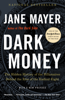
NATIONAL BESTSELLER ONE OF THE NEW YORK TIMES  10 BEST BOOKS OF THE YEAR Who are the immensely wealthy right-wing ideologues shaping the fate of America today? From the bestselling author of  The Dark Side , an electrifying work of investigative journalism that uncovers the agenda of this powerful group. In her new preface, Jane Mayer discusses the results of the most recent election and Donald Trump's victory, and how, despite much discussion to the contrary, this was a huge victory for the billionaires who have been pouring money in the American political system. Why is America living in an age of profound and widening economic inequality? Why have even modest attempts to address climate change been defeated again and again? Why do hedge-fund billionaires pay a far lower tax rate than middle-class workers? In a riveting and indelible feat of reporting, Jane Mayer illuminates the history of an elite cadre of plutocrats—headed by the Kochs, the Scaifes, the Olins, and the Bradleys—who have bankrolled a systematic plan to fundamentally alter the American political system. Mayer traces a byzantine trail of billions of dollars spent by the network, revealing a staggering conglomeration of think tanks, academic institutions, media groups, courthouses, and government allies that have fallen under their sphere of influence. Drawing from hundreds of exclusive interviews, as well as extensive scrutiny of public records, private papers, and court proceedings, Mayer provides vivid portraits of the secretive figures behind the new American oligarchy and a searing look at the carefully concealed agendas steering the nation.  Dark Money  is an essential book for anyone who cares about the future of American democracy. National Book Critics Circle Award Finalist LA Times  Book Prize Finalist PEN/Jean Stein Book Award Finalist Shortlisted for the Lukas Prize |
|
|||
|
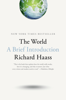
New York Times Bestseller An invaluable primer from Richard Haass, president of the Council on Foreign Relations, that will help anyone, expert and non-expert alike, navigate a time in which many of our biggest challenges come from the world beyond our borders. Like it or not, we live in a global era, in which what happens thousands of miles away has the ability to affect our lives. This time, it is a Coronavirus known as Covid-19, which originated in a Chinese city many had never heard of but has spread to the corners of the earth. Next time it could well be another infectious disease from somewhere else. Twenty years ago it was a group of terrorists trained in Afghanistan and armed with box-cutters who commandeered four airplanes and flew them into buildings (and in one case a field) and claimed nearly three thousand lives. Next time it could be terrorists who use a truck bomb or gain access to a weapon of mass destruction. In 2016 hackers in a nondescript office building in Russia traveled virtually in cyberspace to manipulate America's elections. Now they have burrowed into our political life. In recent years, severe hurricanes and large fires linked to climate change have ravaged parts of the earth; in the future we can anticipate even more serious natural disasters. In 2008, it was a global financial crisis caused by mortgage-backed securities in America, but one day it could well be a financial contagion originating in Europe, Asia, or Africa. This is the new normal of the 21st century. The World is designed to provide readers of any age and experience with the essential background and building blocks they need to make sense of this complicated and interconnected world. It will empower them to manage the flood of daily news. Readers will become more informed, discerning citizens, better able to arrive at sound, independent judgments. While it is impossible to predict what the next crisis will be or where it will originate, those who read The World will have what they need to understand its basics and the principal choices for how to respond. In short, this book will make readers more globally literate and put them in a position to make sense of this era. Global literacy--knowing how the world works--is a must, as what goes on outside a country matters enormously to what happens inside. Although the United States is bordered by two oceans, those oceans are not moats. And the so-called Vegas rule--what happens there stays there--does not apply in today's world to anyone anywhere. U.S. foreign policy is uniquely American, but the world Americans seek to shape is not. Globalization can be both good and bad, but it is not something that individuals or countries can opt out of. Even if we want to ignore the world, it will not ignore us. The choice we face is how to respond. We are connected to this world in all sorts of ways. We need to better understand it, both its promise and its threats, in order to make informed choices, be it as students, citizens, voters, parents, employees, or investors. To help readers do just that, The World focuses on essential history, what makes each region of the world tick, the many challenges globalization presents, and the most influential countries, events, and ideas. Explaining complex ideas with wisdom and clarity, Richard Haass's The World is an evergreen book that will remain relevant and useful as history continues to unfold. |
|
|||
|
For generations of Americans, our country has been the world's dominant military power. How the US military fights, and the systems and weapons that it fights with, have been uncontested. That old reality, however, is rapidly deteriorating. America's traditional sources of power are eroding amid the emergence of new technologies and the growing military threat posed by rivals such as China. America is at grave risk of losing a future war. As Christian Brose reveals in this urgent wake-up call, the future will be defined by artificial intelligence, autonomous systems, and other emerging technologies that are revolutionizing global industries and are now poised to overturn the model of American defense. This fascinating, if disturbing, book confronts the existential risks on the horizon, charting a way for America's military to adapt and succeed with new thinking as well as new technology. America must build a battle network of systems that enables people to rapidly understand threats, make decisions, and take military actions, the process known as "the kill chain." Examining threats from China, Russia, and elsewhere, The Kill Chain offers hope and, ultimately, insights on how America can apply advanced technologies to prevent war, deter aggression, and maintain peace. |

|
|||
|
WHAT JUST HAPPENED? The human cost of the emergency response to COVID-19 has far outweighed the benefits. That’s the sobering verdict of a trio of scholars—a biologist, a statistician, and a philosopher— in this comprehensive assessment of the worst panic-induced disaster in history. As the media fanned the flames of panic, government officials and a new elite of scientific experts ignored the established protocols for mitigating a dangerous disease. Instead, they shut down the world economy, closed every school, confined citizens to their homes, and threatened to enforce a regime of extreme social distancing indefinitely. And the American public—amazingly enough—complied without protest. Modestly but relentlessly focused on what we know and don’t know about the coronavirus, Douglas Axe, William M. Briggs, and Jay W. Richards demonstrate in this eye-opening study what real experts can contribute when a pandemic strikes. In the early spring of 2020, the panic of government officials, the hysteria of the media, and the hubris of suddenly powerful scientists produced a worldwide calamity. The Price of Panic is the essential book for understanding what happened and how to avoid repeating our deadly mistakes. |

|
|||
|
Amongst British diplomats, there’s a poignant joke that ‘Iran is the only country in the world which still regards the United Kingdom as a superpower’. For many Iranians, it’s not a joke at all. The past two centuries are littered with examples of Britain reshaping Iran to suit its own ends, from dominating its oil, tobacco and banking industries to removing its democratically elected Prime Minister, Mohammad Mossadegh, in a 1953 US–UK coup. All this, and the bloody experience of the Iran–Iraq War of 1980–88, when the country stood alone against an act of unprovoked aggression by Saddam Hussein, has left many Iranians with an unwavering mistrust of the West generally and the UK in particular. Today, ordinary Iranians live with an economy undermined by sanctions and corruption, the media strictly controlled, and a hardline regime seeking to maintain its power by demonising outsiders. With tensions rising sharply between Tehran and the West, former Foreign Secretary Jack Straw unveils a richly detailed account of Britain’s turbulent relationship with Iran, illuminating the culture, psychology and history of a much-misunderstood nation. Informed by Straw’s wealth of experience negotiating Iran’s labyrinthine internal politics, The English Job is a powerful, clear-sighted and compelling portrait of an extraordinary country. |

|
|||
|
From FOX & Friends Weekend cohost Pete Hegseth comes a collection of inspiring stories from fifteen of America’s greatest heroes—highly decorated Navy SEALs, Army Rangers, marines, Purple Heart recipients, combat pilots, a Medal of Honor recipient, and more—based on FOX Nation’s hit show of the same name. After three Army deployments—earning two Bronze Stars and a Combat Infantryman’s Badge—Pete Hegseth knows what it takes to be a modern warrior. In Modern Warriors he presents candid, unfiltered conversations with fellow modern warriors and digs for real answers to key questions like: What inspired them to serve? What is their legacy? What does sacrifice really mean to them? How do they handle loss? And what can civilians learn from this latest generation of veterans? From the skies over Afghanistan to the seas of the Mediterranean to the treacherous streets of Iraq, these brave men and women take you inside the firefight, sharing the harrowing realities of war. Hegseth uses their experiences to facilitate conversations about the raw truths of combat, including the difficulties of transitioning back home, while also celebrating these soldiers’ contributions to preserving our nation’s most precious gift—freedom. In addition to the oral history, Modern Warriors presents dozens of personal, rarely shared photos from the battlefield and the home front. Together these stories and images provide an unvarnished representation of battlefield leadership, military morale, and the strain of war. This book is the perfect keepsake and gift for anyone who wants to know what it means, and what it truly takes, to be a patriot. |

|
|||
|
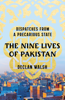
A New York Times New Book to Watch For (November 2020) The former New York Times Pakistan bureau chief paints an arresting, up-close portrait of a fractured country. Declan Walsh is one of the New York Times’s most distinguished international correspondents. His electrifying portrait of Pakistan over a tumultuous decade captures the sweep of this strange, wondrous, and benighted country through the dramatic lives of nine fascinating individuals. On assignment as the country careened between crises, Walsh traveled from the raucous port of Karachi to the salons of Lahore, and from Baluchistan to the mountains of Waziristan. He met a diverse cast of extraordinary Pakistanis—a chieftain readying for war at his desert fort, a retired spy skulking through the borderlands, and a crusading lawyer risking death for her beliefs, among others. Through these “nine lives” he describes a country on the brink—a place of creeping extremism and political chaos, but also personal bravery and dogged idealism that defy easy stereotypes. Unbeknownst to Walsh, however, an intelligence agent was tracking him. Written in the aftermath of Walsh’s abrupt deportation, The Nine Lives of Pakistan concludes with an astonishing encounter with that agent, and his revelations about Pakistan’s powerful security state. Intimate and complex, attuned to the centrifugal forces of history, identity, and faith, The Nine Lives of Pakistan offers an unflinching account of life in a precarious, vital country. |
|
|||
|
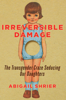
Until just a few years ago, gender dysphoria—severe discomfort in one’s biological sex—was vanishingly rare. It was typically found in less than .01 percent of the population, emerged in early childhood, and afflicted males almost exclusively. But today whole groups of female friends in colleges, high schools, and even middle schools across the country are coming out as “transgender.” These are girls who had never experienced any discomfort in their biological sex until they heard a coming-out story from a speaker at a school assembly or discovered the internet community of trans “influencers.” Unsuspecting parents are awakening to find their daughters in thrall to hip trans YouTube stars and “gender-affirming” educators and therapists who push life-changing interventions on young girls—including medically unnecessary double mastectomies and puberty blockers that can cause permanent infertility. Abigail Shrier,  a writer for the  Wall Street Journal,  has dug deep into the trans epidemic, talking to the girls, their agonized parents, and the counselors and doctors who enable gender transitions, as well as to “detransitioners”—young women who bitterly regret what they have done to themselves. Coming out as transgender immediately boosts these girls’ social status, Shrier finds, but once they take the first steps of transition, it is not easy to walk back. She offers urgently needed advice about how parents can protect their daughters. A generation of girls is at risk. Abigail Shrier’s essential book will help you understand what the trans craze is and how you can inoculate your child against it—or how to retrieve her from this dangerous path. |
|
|||
|
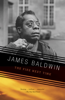
An official Oprah Winfrey’s “The Books That Help Me Through” selection A national bestseller when it first appeared in 1963,  The Fire Next Time  galvanized the nation, gave passionate voice to the emerging civil rights movement—and still lights the way to understanding race in America today.   "Basically the finest essay I’ve ever read. . . . Baldwin refused to hold anyone’s hand. He was both direct and beautiful all at once. He did not seem to write to convince you. He wrote beyond you.” --Ta-Nehisi Coates   At once a powerful evocation of James Baldwin's early life in Harlem and a disturbing examination of the consequences of racial injustice, the book is an intensely personal and provocative document from the iconic author of If Beale Street Could Talk and Go Tell It on the Mountain . It consists of two "letters," written on the occasion of the centennial of the Emancipation Proclamation, that exhort Americans, both black and white, to attack the terrible legacy of racism. Described by  The New York Times Book Review  as "sermon, ultimatum, confession, deposition, testament, and chronicle...all presented in searing, brilliant prose,"  The Fire Next Time  stands as a classic of literature. |
|
|||
|
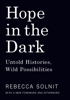
“[A] landmark book . . . Solnit illustrates how the uprisings that begin on the streets can upend the status quo and topple authoritarian regimes” ( Vice ).   A book as powerful and influential as Rebecca Solnit’s Men Explain Things to Me , her Hope in the Dark was written to counter the despair of activists at a moment when they were focused on their losses and had turned their back to the victories behind them—and the unimaginable changes soon to come. In it, she makes a radical case for hope as a commitment to act in a world whose future remains uncertain and unknowable.   Drawing on her decades of activism and a wide reading of environmental, cultural, and political history, Solnit argues that radicals have a long, neglected history of transformative victories, that the positive consequences of our acts are not always immediately seen, directly knowable, or even measurable, and that pessimism and despair rest on an unwarranted confidence about what is going to happen next. Now, with a moving new introduction explaining how the book came about and a new afterword that helps teach us how to hope and act in our unnerving world, she brings a new illumination to the darkness of our times in an unforgettable new edition of this classic book.   “One of the best books of the 21st century.” — The Guardian   “No writer has better understood the mix of fear and possibility, peril and exuberance that’s marked this new millennium.” —Bill McKibben, New York Times –bestselling author of Falter   “An elegant reminder that activist victories are easily forgotten, and that they often come in extremely unexpected, roundabout ways.” — The New Yorker |
|
|||
|
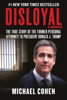
A #1 New York Times Bestseller! "I read it cover-to-cover. I did not intend to, but I started at the beginning and didn’t put it down until it was over."—Rachel Maddow, MSNBC This book almost didn’t see the light of day as government officials tried to bar its publication. The Inside Story of the Real President Trump, by His Former Attorney and Personal Advisor—The Man Who Helped Get Him Into the Oval Office Once Donald Trump’s fiercest surrogate, closest confidant, and staunchest defender, Michael Cohen knows where the skeletons are buried. This is the most devastating business and political horror story of the century. As Trump’s lawyer and “fixer,” Cohen not only witnessed firsthand but was also an active participant in the inner workings of Trump’s business empire, political campaign, and presidential administration. This is a story that you have not read in newspapers, or on social media, or watched on television. These are accounts that only someone who worked for Trump around the clock for over a decade—not a few months or even a couple of years—could know. Cohen describes Trump’s racist rants against President Barack Obama, Nelson Mandela, and Black and Hispanic people in general, as well as the cruelty, humiliation, and abuse he leveled at family and staff. Whether he’s exposing the fact that Trump engaged in tax fraud by inflating his wealth or electronic fraud by rigging an online survey, or outing Trump’s Neanderthal views towards women or his hush-money payments to clandestine lovers, Cohen pulls no punches. He shows Trump’s relentless willingness to lie, exaggerate, mislead, or manipulate. Trump emerges as a man without a soul—a man who courts evangelicals and then trashes them, panders to the common man, but then rips off small business owners, a con man who will do or say absolutely anything to win, regardless of the cost to his family, his associates, or his country. At the heart of Disloyal , we see how Cohen came under the spell of his charismatic "Boss" and, as a result, lost all sense of his moral compass. The real "real" Donald Trump who permeates these pages—the racist, sexist, homophobic, lying, cheating President—will be discussed, written about, and analyzed for years to come. |
|
|||
|
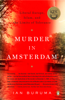
A revelatory look at what happens when political Islam collides with the secular West Ian Buruma's Murder in Amsterdam is a masterpiece of investigative journalism, a book with the intimacy and narrative control of a crime novel and the analytical brilliance for which Buruma is renowned. On a cold November day in Amsterdam in 2004, the celebrated and controversial Dutch filmmaker Theo van Gogh was shot and killed by an Islamic extremist for making a movie that "insulted the prophet Mohammed." The murder sent shock waves across Europe and around the world. Shortly thereafter, Ian Buruma returned to his native land to investigate the event and its larger meaning as part of the great dilemma of our time. |
|
|||
|
As President Trump’s National Security Advisor, John Bolton spent many of his 453 days in the room where it happened, and the facts speak for themselves. The result is a White House memoir that is the most comprehensive and substantial account of the Trump Administration, and one of the few to date by a top-level official. With almost daily access to the President, John Bolton has produced a precise rendering of his days in and around the Oval Office. What Bolton saw astonished him: a President for whom getting reelected was the only thing that mattered, even if it meant endangering or weakening the nation. “I am hard-pressed to identify any significant Trump decision during my tenure that wasn’t driven by reelection calculations,” he writes. In fact, he argues that the House committed impeachment malpractice by keeping their prosecution focused narrowly on Ukraine when Trump’s Ukraine-like transgressions existed across the full range of his foreign policy—and Bolton documents exactly what those were, and attempts by him and others in the Administration to raise alarms about them. He shows a President addicted to chaos, who embraced our enemies and spurned our friends, and was deeply suspicious of his own government. In Bolton’s telling, all this helped put Trump on the bizarre road to impeachment. “The differences between this presidency and previous ones I had served were stunning,” writes Bolton, who worked for Reagan, Bush 41, and Bush 43. He discovered a President who thought foreign policy is like closing a real estate deal—about personal relationships, made-for-TV showmanship, and advancing his own interests. As a result, the US lost an opportunity to confront its deepening threats, and in cases like China, Russia, Iran, and North Korea ended up in a more vulnerable place. Bolton’s account starts with his long march to the West Wing as Trump and others woo him for the National Security job. The minute he lands, he has to deal with Syria’s chemical attack on the city of Douma, and the crises after that never stop. As he writes in the opening pages, “If you don’t like turmoil, uncertainty, and risk—all the while being constantly overwhelmed with information, decisions to be made, and sheer amount of work—and enlivened by international and domestic personality and ego conflicts beyond description, try something else.” The turmoil, conflicts, and egos are all there—from the upheaval in Venezuela, to the erratic and manipulative moves of North Korea’s Kim Jong Un, to the showdowns at the G7 summits, the calculated warmongering by Iran, the crazy plan to bring the Taliban to Camp David, and the placating of an authoritarian China that ultimately exposed the world to its lethal lies. But this seasoned public servant also has a great eye for the Washington inside game, and his story is full of wit and wry humor about how he saw it played. |

|
|||
|
INSTANT NEW YORK TIMES BESTSELLER “A thorough and damning exploration of the incestuous relationship between Trump and his favorite channel.” — The New York Times “A Rosetta Stone for stuff about this presidency that doesn’t otherwise make sense to normal humans.” —Rachel Maddow, MSNBC “Stelter’s critique goes beyond salacious tidbits about extramarital affairs (though there are plenty of those) to expose a collusion that threatens the pillars of our democracy.” — The Washington Post The urgent and untold story of the collusion between Fox News and Donald Trump from the New York Times bestselling author of Top of the Morning . While other leaders were marshaling resources to combat the greatest pandemic in modern history, President Donald Trump was watching TV. Trump watches over six hours of Fox News a day, a habit his staff refers to as “executive time.” In January 2020, when Fox News began to downplay COVID-19, the President was quick to agree. In March, as the deadly virus spiraled out of control, Sean Hannity mocked “coronavirus hysteria” as a “new hoax” from the left. Millions of Americans took Hannity and Trump's words as truth—until some of them started to get sick. In Hoax , CNN anchor and chief media correspondent Brian Stelter tells the twisted story of the relationship between Donald Trump and Fox News. From the moment Trump glided down the golden escalator to announce his candidacy in the 2016 presidential election to his acquittal on two articles of impeachment in early 2020, Fox hosts spread his lies and smeared his enemies. Over the course of two years, Stelter spoke with over 250 current and former Fox insiders in an effort to understand the inner workings of Rupert Murdoch's multibillion-dollar media empire. Some of the confessions are alarming. “We don't really believe all this stuff,” a producer says. “We just tell other people to believe it.” At the center of the story lies Sean Hannity, a college dropout who, following the death of Fox News mastermind Roger Ailes, reigns supreme at the network that pays him $30 million a year. Stelter describes the raging tensions inside Fox between the Trump loyalists and the few remaining journalists. He reveals why former chief news anchor Shep Smith resigned in disgust in 2019; why a former anchor said “if I stay here I’ll get cancer;” and how Trump has exploited the leadership vacuum at the top to effectively seize control of the network. Including never before reported details, Hoax exposes the media personalities who, though morally bankrupt, profit outrageously by promoting the President’s propaganda and radicalizing the American right. It is a book for anyone who reads the news and wonders: How did this happen? |
|
|||
|
First published in 1971, Rules for Radicals is Saul Alinsky's impassioned counsel to young radicals on how to effect constructive social change and know “the difference between being a realistic radical and being a rhetorical one.” Written in the midst of radical political developments whose direction Alinsky was one of the first to question, this volume exhibits his style at its best. Like Thomas Paine before him, Alinsky was able to combine, both in his person and his writing, the intensity of political engagement with an absolute insistence on rational political discourse and adherence to the American democratic tradition. |
|
|||
|
We are now living in a world where Brexit and Trump are daily realities. But how did this come about? And what does it mean for the future? Populism and ultra-nationalism brought about the rise of Hitler and Mussolini in the 1930s. Now, as Trump sits in the White House, Britain negotiates its way out of the EU, and countries across Europe see substantial gains in support for the extreme Right, award-winning journalist, author, and historian Gwynne Dyer asks how we got here, and where we go next. Dyer examines the global challenges facing us all today and explains how they have contributed to a world of inequality, poverty, and joblessness — conditions which he argues inevitably lead to the rise of populism. The greatest threat to social and political stability, he argues, lies in the rise of automation, which will continue to eliminate jobs, whether politicians admit that it is happening or not. To avoid a social and political catastrophe, we will have to find ways of putting real money into the pockets of those who have no work. But this is not a book without hope. Our capacity for overcoming the worst has been tested again and again throughout history, and we have always survived. To do so now, Dyer argues, we must embrace radical solutions to the real difficulties facing individuals, or find ourselves back in the 1930s with no way out. |
|
|||
|
Following his #1 New York Times bestseller, Our Endangered Values , the former president, winner of the Nobel Peace Prize, offers an assessment of what must be done to bring permanent peace to Israel with dignity and justice to Palestine. President Carter, who was able to negotiate peace between Israel and Egypt, has remained deeply involved in Middle East affairs since leaving the White House. He has stayed in touch with the major players from all sides in the conflict and has made numerous trips to the Holy Land, most recently as an observer in the Palestinian elections of 2005 and 2006. In this book President Carter shares his intimate knowledge of the history of the Middle East and his personal experiences with the principal actors, and he addresses sensitive political issues many American officials avoid. Pulling no punches, Carter prescribes steps that must be taken for the two states to share the Holy Land without a system of apartheid or the constant fear of terrorism. The general parameters of a long-term, two-state agreement are well known, the president writes. There will be no substantive and permanent peace for any peoples in this troubled region as long as Israel is violating key U.N. resolutions, official American policy, and the international "road map" for peace by occupying Arab lands and oppressing the Palestinians. Except for mutually agreeable negotiated modifications, Israel's official pre-1967 borders must be honored. As were all previous administrations since the founding of Israel, U.S. government leaders must be in the forefront of achieving this long-delayed goal of a just agreement that both sides can honor. Palestine Peace Not Apartheid is a challenging, provocative, and courageous book. |

|
|||
|
“ New Dark Age  is among the most unsettling and illuminating books I’ve read about the Internet, which is to say that it is among the most unsettling and illuminating books I’ve read about contemporary life.”  –  New Yorker As the world around us increases in technological complexity, our understanding of it diminishes. Underlying this trend is a single idea: the belief that our existence is understandable through computation, and more data is enough to help us build a better world. In reality, we are lost in a sea of information, increasingly divided by fundamentalism, simplistic narratives, conspiracy theories, and post-factual politics. Meanwhile, those in power use our lack of understanding to further their own interests. Despite the apparent accessibility of information, we’re living in a new Dark Age. From rogue financial systems to shopping algorithms, from artificial intelligence to state secrecy, we no longer understand how our world is governed or presented to us. The media is filled with unverifiable speculation, much of it generated by anonymous software, while companies dominate their employees through surveillance and the threat of automation. In his brilliant new work, leading artist and writer James Bridle surveys the history of art, technology, and information systems, and reveals the dark clouds that gather over our dreams of the digital sublime. |